
Dear 2076
A liberalism with limits after abundance

I’m returning from vacation, feeling truly rested, having just turned 46, and doing that thing that middle-aged people do from time to time, which is to question how my politics have changed since my younger days.
My grandmother turns 97 next month. She complains about her faulty memory, but she is able to recall details from our previous conversations that I often forget. I would guess she lives past 100.1 Assuming I do the same, what would I like to tell my 96-year-old self in 2076?2
If the story of my grandmother’s lifetime was overcoming scarcity, will my generation survive abundance?
One month after my grandmother was born, President Herbert Hoover commissioned a group of social scientists to compile a detailed report on the state of the nation. Derek Thompson resurfaced their report, noting that in some ways, the Americas of 2026 and 1926 are eerily similar: technological anxiety, a backlash against immigration, new media, and a rising stock market shadowed by economic anxiety.
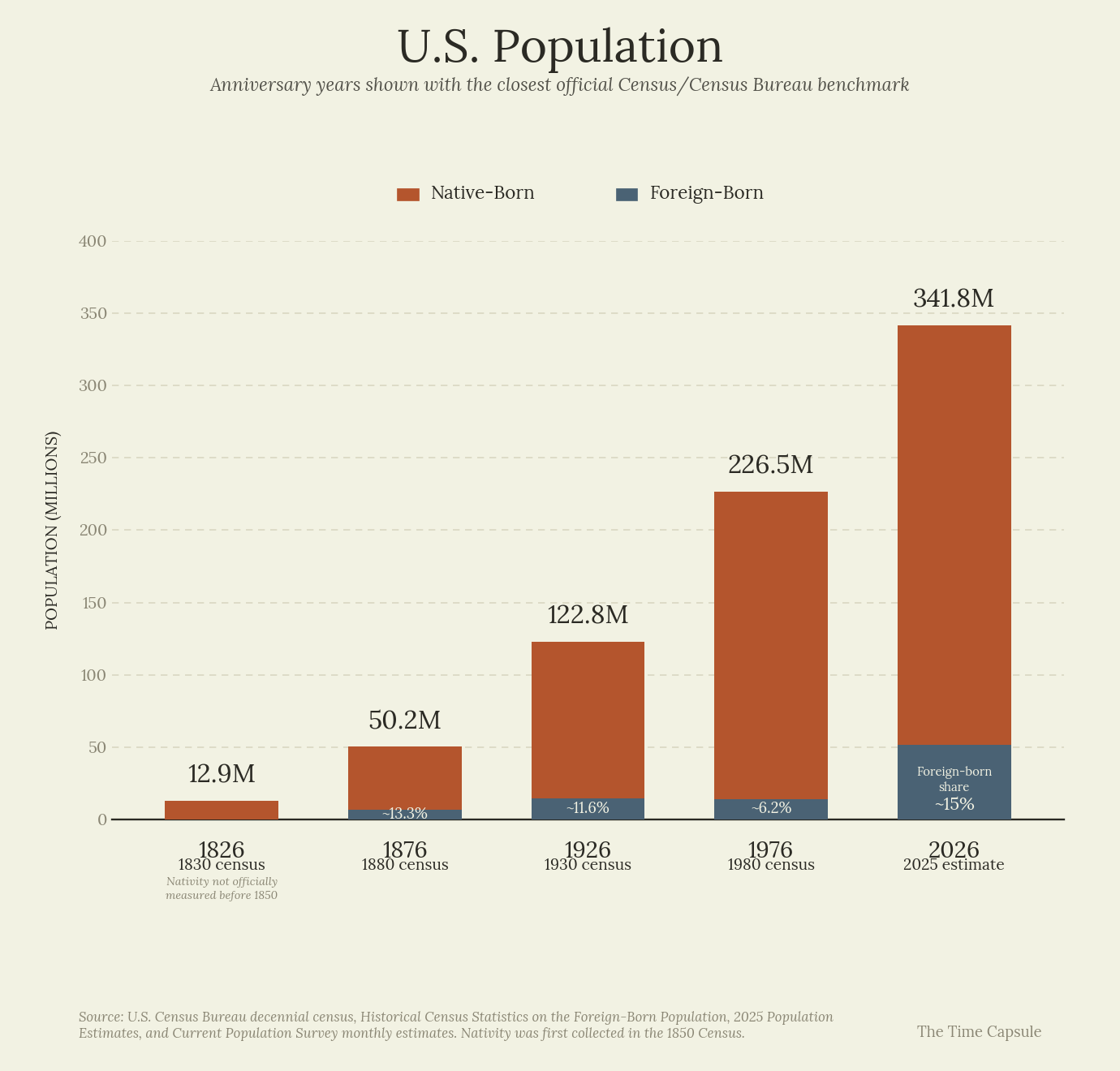
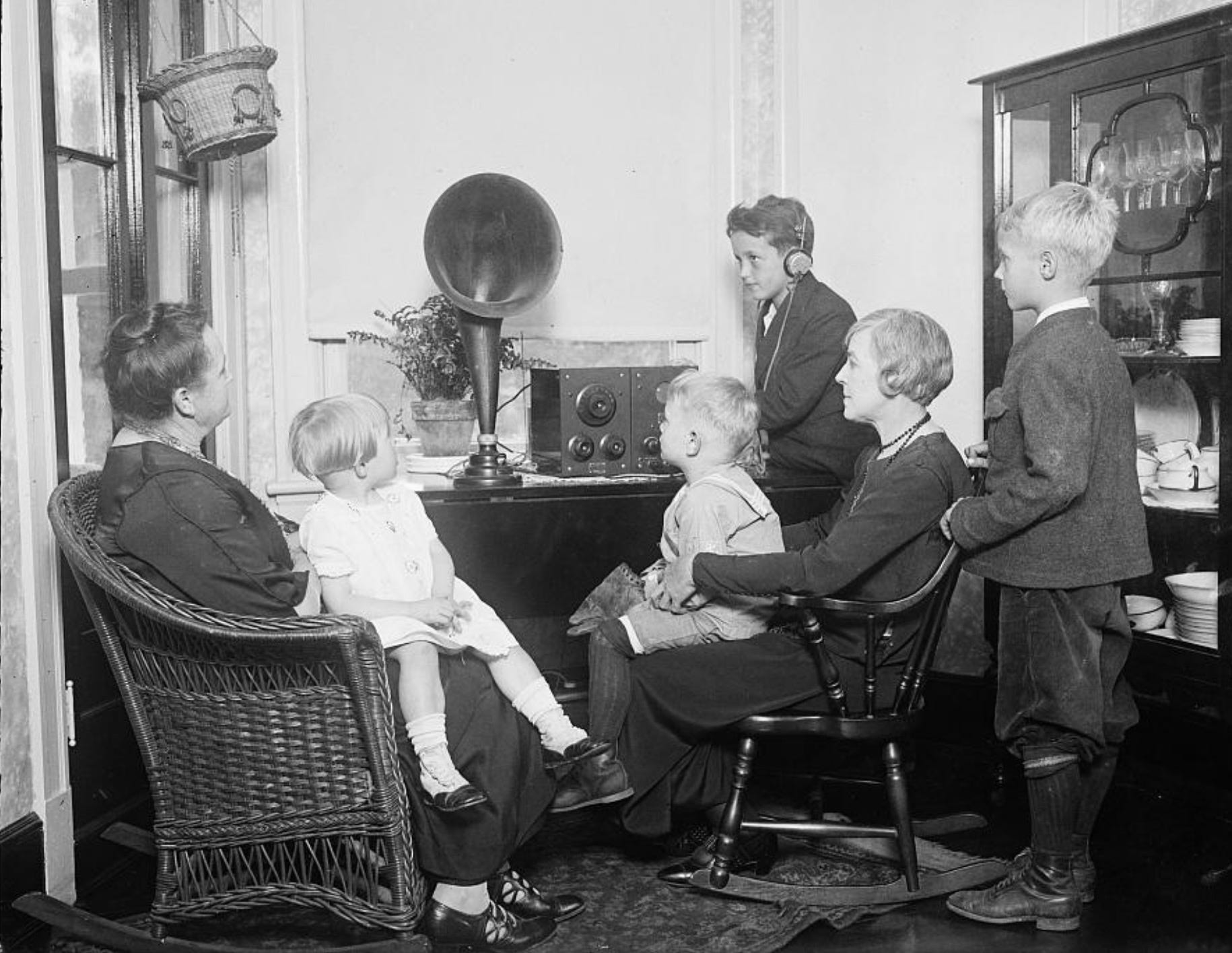
But, “in other ways, the America of 1926 was another world—practically another planet.” Mostly rural, little plumbing and electricity. Few radios, no TVs, and still a year from the first movie with sound.
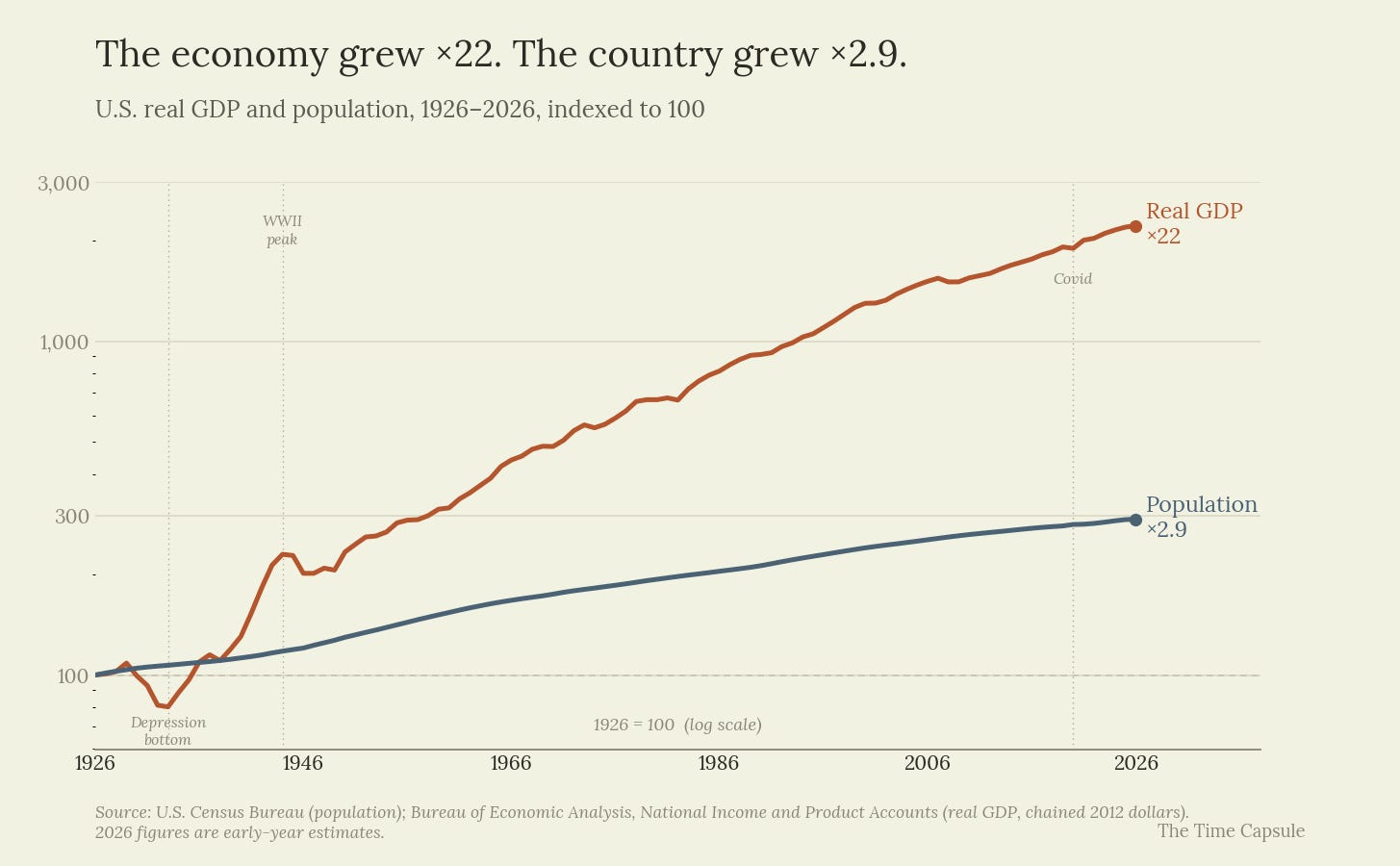
The last American century, despite its world wars and atomic bombs, is a story of a rising population, economy, and the expansion of freedom and rights. America became richer and freer than my great-grandparents could have imagined.3
For Geoffrey Manne, that should be enough. Liberalism ought to provide us with more wealth and choices. It should protect us from coercion. But liberalism should not impose a vision of the good life. We should be wary, as John Stuart Mill warned, of any proposal to interfere with a person’s liberty “for their own good.”
I share Manne’s concern. People love to control one another, much to our detriment. Progressives went on a control binge in 2020: a coercive, counter-productive string of mandatory DEI statements, mask mandates, diversity trainings, campus speech restrictions, and cancellations. Soon enough, MAGA had a chance to enact their own: book bans, curriculum and travel restrictions, lawsuits against universities and media, and a rollback of reproductive choice.
Liberalism protects us from the control of others, offering a pluralism of experiments in living: whether and whom you marry, what you eat, and how you spend your time.
I am instinctively skeptical of any impulse to impose a vision of the good life on others. And yet, I am also skeptical of an ideology that merely offers economic growth and consumer choice without an aspirational, humanistic vision of the good life.
The technological change of the past decade has changed the terms of the debate.
Social media, gaming, gambling, and porn hijacked our attention and desire.
AI served up “the fourth humiliation,” besting humans at most endeavors, redefining the need and meaning of many work tasks.
Algorithmic media separates us into separate worlds, hypnotized by the stimulation of private feeds.
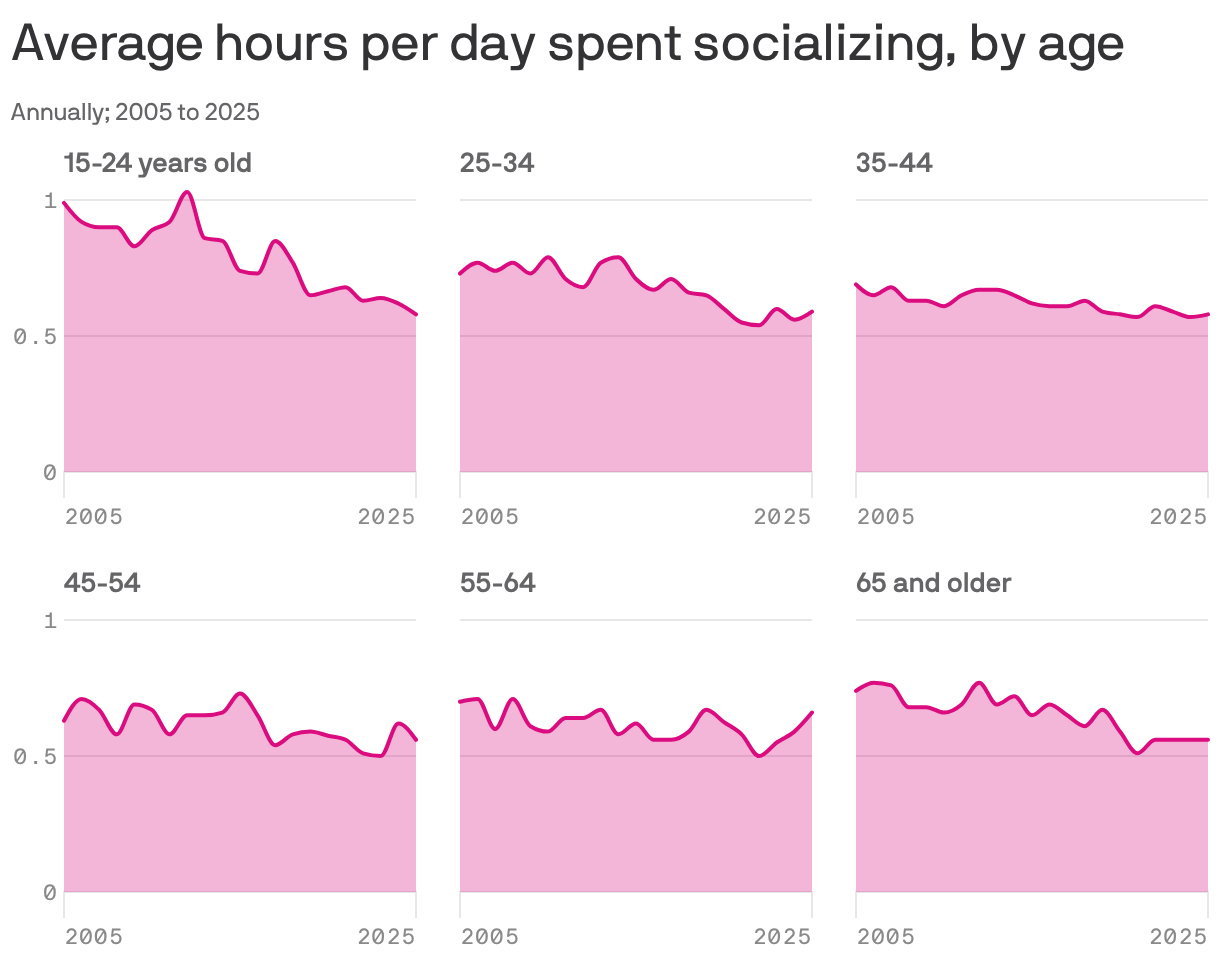
Ideally, a pluralistic vision of meaning, purpose, and belonging would come from society, not public policy. But I worry that society isn’t up to the task without a few nudges from policymakers.
A liberalism and mindset for the next 250 years
Can the next 250 years of American liberalism cultivate flourishing without reducing freedom? Brink Lindsey walks a tightrope between prescription and pluralism: “There are many possible ways to develop one’s talents,” he observes, and yet liberalism ought to insist on self-development over self-indulgence, agency over addiction, and connection over alienation.
Liberalism doesn’t tell you which books to read, but it does esteem intellectual effort and rigor. Liberalism doesn’t tell you which tasks you should excel at, but it does prize excellence and the dedication and teamwork needed to achieve it. Liberalism doesn’t tell you whom to love, but it does lay its foundations on the “small platoons” of face-to-face relationships through which we learn to commit to something greater than ourselves.
That seems right to me. A liberalism of flourishing would not ban people from their baser pleasures. If future Americans want to gamble, watch pornography, flirt with chatbots, and live among screens and sex robots, that is their right. But we all have higher and lower desires. A humanistic liberalism would add friction to the impulses that diminish meaning and remove friction from the commitments that deepen connection.

As individuals, I suspect we’ll need a complementary mindset that cultivates craft, constraints, and connection.
Craft: We live in a quantified world of likes, rankings, and streaks. A counter-culture of craft encourages a job done well for its own sake. It offers the pleasure of competence without the social comparison of the scoreboard.
Constraints: Even beyond consumer choice, there are infinite ways to live. But meaning often comes from subtraction. Our values, taste, and duties narrow the anxiety of possibility into a more relaxed authenticity of self-knowledge.
Connection: The ego seeks attention, the heart wants connection. They are often at odds. Attention rewards the swagger of confidence. Connection demands curiosity, vulnerability, and patience.
Maybe these are timeless principles for any age, but they seem particularly relevant in the face of abundance, choice, and social media.
The letter your 96-year-old self might send back
So there you have it, 96-year-old-me, a little time capsule of personal political philosophy.
I wonder how it will read in 50 years.
You might like to be reminded that America deposited its own time capsule in 2026 to be reopened in 2276. In the spirit of American pluralism, it contains contributions from all three branches of the federal government, all 50 states, DC, and five U.S. territories. On brand, California contributed a two-page description of 2276 as imagined by Claude.
I followed suit, asking Claude and ChatGPT what the world will be like in 2076 — and what I will be like at 96 based on what they know about me. Their responses were fascinating, at least to me.4 But then ChatGPT concluded with something I didn’t expect: “The letter your 96-year-old self might send back.”
He would probably tell you this:
Do not confuse analysis with wisdom.
Do not confuse productivity with contribution.
Protect your body.
Invest in place.
Keep writing.
Be generous with younger people.
Take your marriage seriously as a civilization of two.
Spend more time with the people whose deaths would change you.
And remember that limits are not the enemy of freedom; they are often what make freedom sweet.
I have a feeling that AI and I will get along just fine over the next half-century. But you can be the judge of that, 96-year-old-me.
I’ve written previously about my grandmother’s “bonus second life.” Life expectancy at birth in 1930 was only 58 for men and 62 for women.
I imagine myself in the year 2076, drinking my morning coffee and re-reading this post. I’m sitting on a balcony overlooking a nature preserve as the United States prepares to celebrate its 300th anniversary.
And when they did imagine population growth, many assumed it would lead to mass famine and societal upheaval.
Reading someone’s ChatGPT responses is like hearing them recount a long dream, so I apologize for what follows.
related to your birthday reflection, I've been reading about how to age well, and I wonder whether/where these pursuits (nutrition, exercise, etc.) fit within "Constraints" and "protect your body"? I actually enjoy exercise, so seems like it's another category of thing...
"A humanistic liberalism would add friction to the impulses that diminish meaning and remove friction from the commitments that deepen connection."
Maybe you are thinking of a model that shows just what that might look like?